
 By Daxton Derek
Vehicle safety has transformed from basic mechanical protections into sophisticated digital ecosystems designed to prevent crashes before they happen. What began as simple structural reinforcements now includes radar, cameras, artificial intelligence, and real-time connectivity. This evolution reflects decades of engineering breakthroughs, regulatory changes, and a growing public demand for safer roads.
The Early Foundations of Automotive Safety (1900s–1950s)
In the early days of automobiles, safety was not a primary focus. Cars were built for speed and mobility, often lacking even basic protective features.
Key Developments:
-
Mechanical brakes replaced rudimentary hand-operated systems.
-
Safety glass windshields (introduced in the 1920s–30s) prevented dangerous shattering.
-
Stronger steel frames improved structural integrity.
At this stage, safety was mostly about reducing injury during a crash, not preventing one.
The Birth of Modern Safety Features (1950s–1970s)
The mid-20th century marked a turning point in automotive safety. Research into crash dynamics led to life-saving innovations.
Breakthrough Innovations:
-
Three-point seatbelt (1959) – dramatically reduced fatal injuries.
-
Collapsible steering columns – minimized chest trauma.
-
Airbags (1970s prototypes) – deployed in severe collisions.
-
Crumple zones – absorbed crash energy instead of transferring it to passengers.
During this era, governments began introducing safety regulations, making features like seatbelts mandatory in many countries.
Electronic Safety Systems Take Over (1980s–1990s)
As computing power entered vehicles, electronics reshaped automotive safety.
Major Advancements:
-
Anti-lock Braking System (ABS) – prevented wheel lock during hard braking.
-
Electronic Stability Control (ESC) – reduced skidding and rollovers.
-
Traction Control Systems (TCS) – improved grip on slippery surfaces.
-
Dual front airbags became increasingly common.
These technologies marked the shift from purely passive protection to active safety systems that help drivers maintain control.
The Rise of Advanced Driver Assistance Systems (2000s–2010s)
The 21st century introduced intelligent assistance features powered by sensors, radar, and cameras.
Notable Systems:
-
Lane Departure Warning (LDW) – alerts drivers if they drift from lanes.
-
Blind Spot Monitoring (BSM) – detects vehicles in adjacent lanes.
-
Adaptive Cruise Control (ACC) – maintains a safe following distance.
-
Automatic Emergency Braking (AEB) – applies brakes to prevent collisions.
These technologies are part of Advanced Driver Assistance Systems (ADAS), designed to reduce human error—the leading cause of road accidents.
The Era of Semi-Autonomous and Smart Vehicles (2020s–Present)
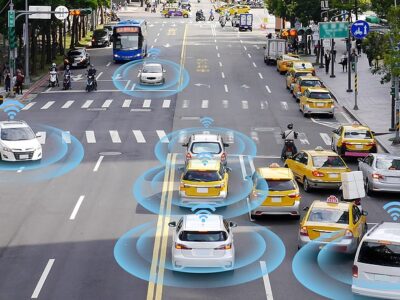
Today’s vehicles integrate artificial intelligence, connectivity, and real-time data processing.
Cutting-Edge Innovations:
-
360-degree surround-view cameras
-
Driver monitoring systems using facial recognition
-
Vehicle-to-Vehicle (V2V) communication
-
Semi-autonomous driving systems
Modern safety technology aims not just to protect occupants, but to predict and prevent accidents entirely.
Passive vs. Active vs. Preventive Safety
Understanding vehicle safety evolution requires recognizing three main categories:
1. Passive Safety
Designed to protect occupants during a crash.
-
Seatbelts
-
Airbags
-
Crumple zones
2. Active Safety
Helps drivers avoid accidents.
-
ABS
-
ESC
-
Traction control
3. Preventive (Advanced) Safety
Uses automation and intelligence.
-
AEB
-
Lane-keeping assist
-
Adaptive cruise control
The shift over time has moved from survival after impact to avoiding impact altogether.
The Role of Regulation and Testing
Safety technology did not evolve by innovation alone. Regulatory agencies and crash-testing programs played a crucial role.
-
Mandatory seatbelt laws increased adoption.
-
Crash test ratings influenced consumer choices.
-
Electronic stability control became required in many countries by the 2010s.
Manufacturers now compete not only on performance and comfort, but also on safety ratings.
Future Trends in Vehicle Safety
The next wave of safety technology will focus on:
-
Fully autonomous driving
-
AI-driven hazard prediction
-
Smart infrastructure integration
-
Enhanced pedestrian detection systems
-
Cybersecurity protections for connected vehicles
As electric vehicles become mainstream, battery safety and structural redesigns are also gaining attention.
Frequently Asked Questions (FAQs)
1. What was the first major automotive safety invention?
The three-point seatbelt, introduced in 1959, is widely considered the most significant early safety innovation due to its proven life-saving impact.
2. How does Electronic Stability Control improve safety?
ESC detects when a vehicle begins to skid and automatically applies braking to individual wheels to restore control.
3. Are Advanced Driver Assistance Systems the same as self-driving technology?
No. ADAS assists drivers but still requires human control, whereas self-driving systems aim for full automation.
4. Do modern cars prevent all accidents?
No technology can eliminate all accidents, but modern systems significantly reduce the risk and severity of collisions.
5. Why are crumple zones important?
They absorb and dissipate crash energy, reducing the force transferred to occupants inside the cabin.
6. Is vehicle-to-vehicle communication widely used today?
It is still developing, but pilot programs and new models are beginning to integrate V2V systems.
7. What safety feature has saved the most lives?
Seatbelts remain the most effective and widely credited safety feature in automotive history.