
 By Daxton Derek
Technology is no longer just a support function inside organizations—it is the central driver of how work is designed, performed, and evaluated. From artificial intelligence to immersive digital environments, innovation is transforming industries at a pace that challenges traditional business models and workforce structures.
The future of work is not a distant concept. It is unfolding now, reshaping roles, redefining productivity, and altering the relationship between employers and employees.
The Rise of Intelligent Automation
Automation has evolved far beyond simple mechanical repetition. Today’s systems combine artificial intelligence (AI), machine learning, and robotics to handle complex tasks that once required human judgment.
Key Impacts of Automation
-
Increased efficiency through process optimization
-
Reduction in manual errors via algorithmic precision
-
Cost savings in repetitive and time-intensive operations
-
New job categories in AI development, maintenance, and oversight
Industries such as manufacturing, logistics, finance, and healthcare now rely heavily on intelligent systems. While some routine roles are declining, demand for technical, analytical, and creative skills is rising.
Rather than eliminating work entirely, automation is redefining the nature of work.
Remote Work and Digital Collaboration
The expansion of cloud computing and communication platforms has fundamentally altered workplace geography. Employees can now collaborate across continents in real time.
Benefits of a Distributed Workforce
-
Access to global talent pools
-
Lower infrastructure costs
-
Greater employee flexibility
-
Improved work-life balance
Digital collaboration tools, project management platforms, and virtual meeting environments have become standard infrastructure. As hybrid models grow, organizations are investing in cybersecurity and digital workflow integration to maintain productivity and data integrity.
The workplace is no longer confined to physical offices—it exists wherever connectivity exists.
Data-Driven Decision Making
Modern organizations rely heavily on data analytics to guide strategy. Advanced analytics platforms provide real-time insights into operations, customer behavior, and market trends.
How Data Is Transforming Work
-
Predictive analytics for demand forecasting
-
Performance tracking using measurable KPIs
-
Personalized customer experiences
-
Evidence-based hiring and workforce planning
The ability to interpret and act on data is becoming a core professional skill. Roles that combine technical literacy with strategic thinking are especially valuable in this evolving landscape.
The Emergence of Augmented and Virtual Reality
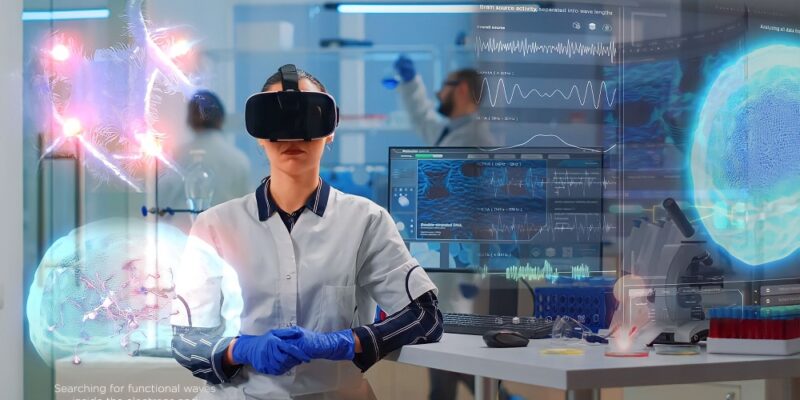
Immersive technologies are entering training, design, and simulation environments. Augmented Reality (AR) and Virtual Reality (VR) allow professionals to interact with digital models in realistic scenarios.
Applications in the Workplace
-
Technical training simulations
-
Virtual onboarding experiences
-
Collaborative product design
-
Remote maintenance assistance
These tools reduce training costs while enhancing learning retention. In high-risk industries, simulation environments improve safety without exposing workers to real hazards.
The Gig Economy and Platform Work
Technology platforms have enabled independent professionals to offer services directly to clients. This shift has expanded freelance and contract-based opportunities across sectors.
Characteristics of Platform-Based Work
-
Flexible scheduling
-
Project-based contracts
-
Digital reputation systems
-
On-demand service delivery
While this model offers autonomy, it also raises questions about job security, benefits, and labor protections. Policymakers and companies continue to explore balanced regulatory frameworks.
Continuous Learning and Reskilling
As technology evolves, skills can become outdated quickly. Lifelong learning is no longer optional—it is essential.
Critical Skills for the Future
-
Digital literacy
-
Critical thinking
-
Emotional intelligence
-
Adaptability
-
Cross-disciplinary collaboration
Organizations are increasingly investing in employee development programs, online courses, and micro-credentialing initiatives. Workers who embrace continuous learning are better positioned to thrive amid rapid change.
Human-Centered Technology
Despite rapid innovation, the most successful technological transformations prioritize people. Tools must enhance—not replace—human capability.
Businesses that focus on ethical AI, transparent algorithms, and inclusive design build stronger trust among employees and customers. Leadership now requires balancing technological advancement with human well-being.
The future of work will not be defined solely by machines, but by how humans choose to use them.
FAQs
1. Will automation eliminate most jobs in the future?
Automation is likely to replace certain repetitive roles, but it will also create new positions that require technical expertise, creativity, and oversight. Historically, technological shifts tend to transform employment rather than eliminate it entirely.
2. What industries are most affected by technological change?
Manufacturing, finance, healthcare, retail, logistics, and information technology are experiencing significant transformation due to automation, data analytics, and digital platforms.
3. How can employees prepare for technology-driven change?
Workers can prepare by developing digital literacy, improving adaptability, and pursuing ongoing education in emerging tools and technologies.
4. Is remote work expected to remain common?
Hybrid and remote models are likely to remain part of the modern workforce, supported by advancements in cloud computing and collaboration technologies.
5. What role does artificial intelligence play in hiring?
AI is used to screen resumes, analyze candidate data, and identify patterns that align with job requirements. However, human oversight remains essential to ensure fairness and reduce bias.
6. Are soft skills still important in a technology-driven workplace?
Yes. Skills such as communication, leadership, empathy, and problem-solving are increasingly valuable as automation handles technical and repetitive tasks.
7. How does technology impact workplace culture?
Technology influences communication styles, performance tracking, flexibility, and collaboration. Organizations must intentionally design digital systems that support transparency and employee engagement.