 By Daxton Derek
Introduction
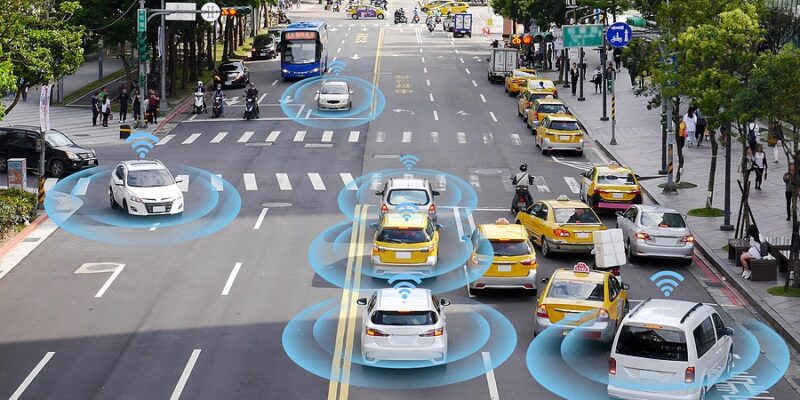
Vehicle-to-Everything (V2X) communication is a transformative automotive technology that allows vehicles to communicate with their surroundings in real time. This includes other vehicles, infrastructure, pedestrians, networks, and even the power grid. The primary goal of V2X is to improve road safety, traffic efficiency, and driving convenience while supporting the evolution of autonomous and connected mobility.
As vehicles become smarter and cities more connected, V2X is emerging as a critical building block of next-generation transportation systems.
How V2X Communication Works
V2X systems rely on wireless communication technologies that enable vehicles to send and receive data within milliseconds. This data can include speed, position, road conditions, traffic signals, and potential hazards.
Core technologies behind V2X include:
-
Dedicated Short-Range Communications (DSRC)
-
Cellular-based V2X (C-V2X) using 4G and 5G networks
-
Onboard sensors and GPS systems
By processing this information instantly, vehicles can react faster than human drivers, significantly reducing accident risks.
Types of V2X Communication
V2X is an umbrella term that includes several communication types, each serving a specific purpose.
Vehicle-to-Vehicle (V2V)
V2V enables cars to exchange information such as speed, direction, and braking status. This helps prevent collisions, especially in scenarios like sudden stops or blind intersections.
Vehicle-to-Infrastructure (V2I)
V2I allows vehicles to communicate with traffic lights, road signs, toll booths, and construction zones. It helps optimize traffic flow and reduce congestion.
Vehicle-to-Pedestrian (V2P)
V2P technology detects pedestrians and cyclists carrying smart devices, alerting drivers to their presence and reducing the risk of accidents in urban areas.
Vehicle-to-Network (V2N)
V2N connects vehicles to cloud-based networks for navigation updates, traffic data, weather alerts, and software updates.
Vehicle-to-Grid (V2G)
V2G enables electric vehicles to communicate with power grids, allowing energy storage, load balancing, and even feeding electricity back into the grid.
Key Benefits of V2X Technology
V2X offers advantages that go beyond traditional vehicle safety systems.
Major benefits include:
-
Enhanced road safety through real-time hazard alerts
-
Reduced traffic congestion via optimized signal timing
-
Lower emissions from smoother traffic flow
-
Improved driving comfort with predictive navigation
-
Support for autonomous vehicles and smart cities
These benefits make V2X a cornerstone of future mobility ecosystems.
V2X and Autonomous Driving
Autonomous vehicles depend heavily on accurate, real-time data. While sensors like cameras and radar detect nearby objects, V2X provides situational awareness beyond line of sight.
For example, a self-driving car can receive warnings about accidents or road closures ahead, even before its sensors detect them. This combination dramatically improves decision-making and safety.
Challenges and Limitations of V2X
Despite its potential, V2X adoption faces several obstacles.
Key challenges include:
-
High infrastructure deployment costs
-
Data privacy and cybersecurity concerns
-
Compatibility between different communication standards
-
Limited adoption in regions lacking smart infrastructure
Addressing these challenges is essential for widespread V2X implementation.
The Future of V2X Communication
As 5G networks expand and smart city projects accelerate, V2X technology is expected to become standard in modern vehicles. Governments and automakers are increasingly collaborating to integrate V2X into traffic systems, paving the way for safer, greener, and more efficient transportation.
In the long term, V2X will play a vital role in reducing accidents, easing congestion, and enabling fully autonomous mobility.
Frequently Asked Questions (FAQs)
1. Is V2X communication already available in cars?
Yes, some modern vehicles already support limited V2X features, depending on regional infrastructure and regulations.
2. Does V2X replace onboard vehicle sensors?
No, V2X complements sensors by providing external data that sensors alone cannot detect.
3. Is V2X communication secure?
Security measures such as encryption and authentication are used, but cybersecurity remains an ongoing concern.
4. Do drivers need internet access for V2X to work?
Some V2X functions work without internet, while others rely on cellular networks for cloud-based data.
5. How does V2X help reduce traffic congestion?
It enables vehicles to adjust speed based on traffic signals and road conditions, improving overall traffic flow.
6. Will V2X be mandatory in the future?
Some regions are considering regulations, but global mandates will depend on policy and infrastructure readiness.
7. Is V2X only useful for autonomous cars?
No, even human-driven vehicles benefit from improved safety alerts and traffic information.