 By Daxton Derek
Container gardening offers a practical solution for growing fruit trees in limited spaces, such as patios, balconies, or small gardens. Rootstocks control the size, vigour, and fruiting characteristics of fruit trees, making them the foundation of successful container cultivation. This article explores the top four rootstocks ideal for container-grown fruit trees, focusing on their suitability for apples, pears, plums, and cherries. A specialist from Chris Bowers & Sons, a nursery with over 30 years of experience, advises that choosing dwarfing rootstocks is essential for container success, as they limit tree size while promoting early fruiting.
Rootstocks and Their Role in Container Gardening
Rootstocks are the root systems onto which fruit tree varieties are grafted. They determine the tree’s mature size, growth rate, and adaptability to specific conditions, such as soil type or container environments. In container gardening, dwarfing rootstocks are preferred because they restrict growth, allowing trees to remain manageable in pots while still producing substantial yields. These rootstocks also encourage precocity, meaning trees bear fruit earlier in their lifecycle compared to those on vigorous rootstocks. For gardeners seeking fruit trees for sale, understanding the rootstock is as important as selecting the fruit variety, as it directly impacts long-term success in confined spaces.
Container-grown fruit trees require rootstocks that balance compact growth with robust health. The restricted root space in pots demands rootstocks that are shallow-rooting yet capable of supporting the tree’s nutritional needs. Additionally, dwarfing rootstocks are often more precocious, producing fruit within one to three years, which is ideal for gardeners eager to enjoy home-grown produce quickly. The four rootstocks discussed—M27 for apples, Quince C for pears, Pixy for plums, and Gisela 5 for cherries—are among the best choices for British gardeners aiming to cultivate fruit trees in containers.
M27: The Ultimate Apple Rootstock for Containers
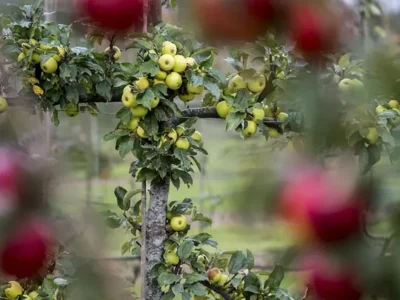
For apple trees, the M27 rootstock stands out as the premier choice for container gardening. Developed at the East Malling Research Station, M27 is an extremely dwarfing rootstock, producing trees that mature at approximately 1.5 to 1.8 metres in height with a similar spread. This compact size makes it ideal for 18-inch pots, fitting perfectly on patios or small garden spaces. Despite its small stature, M27 trees can yield up to 20-30 pounds of fruit per tree when fully established, with fruits often larger than those on more vigorous rootstocks due to concentrated energy allocation.
M27’s precocity is a significant advantage, with many trees fruiting in their first or second year. Its naturally picturesque form mimics a scaled-down traditional apple tree, complete with fragrant spring blossom that enhances patio aesthetics. However, M27 requires good soil conditions, ideally a loam-based compost like John Innes No. 2, to perform at its best. Gardeners must ensure regular watering, as the shallow root system is susceptible to drying out. Self-fertile varieties such as Redsleeves, Greensleeves, or Red Falstaff are recommended for single-tree containers to avoid pollination issues, though planting multiple trees widens variety options.
While M27 is highly productive, it demands careful management. Trees may need staking to prevent toppling in windy conditions, and regular feeding with a balanced fertiliser supports healthy growth. For those seeking fruit trees for sale on M27 rootstock, specialist nurseries offer a range of varieties suited to container cultivation, ensuring both aesthetic appeal and bountiful harvests.
Quince C: The Go-To Rootstock for Pears
For pear trees, Quince C is the most suitable rootstock for container growing. This dwarfing rootstock produces trees that reach 2 to 2.4 metres in height, making them slightly larger than M27 apples but still manageable in pots of at least 18 inches in diameter. Quince C is compatible with most pear varieties and promotes early cropping, typically within two to three years. Its compact nature makes it ideal for trained forms like cordons or stepovers, but it excels in free-standing container setups as well.
The standout variety for Quince C is Concorde, a self-fertile pear that yields sweet, juicy fruits from early October. Conference, another self-fertile option, also performs well on this rootstock, while Williams requires a pollination partner like Concorde or Conference for successful fruiting. Quince C trees thrive in sunny, sheltered spots, where their early blossom benefits from the warmer microclimate near a house. Protection from late frosts, such as covering with fleece, is advisable to safeguard blossoms and ensure fruit set.
Quince C’s adaptability to average soil conditions and its relatively small root system make it a practical choice for container gardeners. Regular watering and feeding are essential, particularly during the growing season, to prevent stress and support fruit development. For gardeners exploring fruit trees for sale, Quince C-rooted pears offer a reliable option for producing high-quality fruit in limited spaces.
Pixy: The Dwarfing Choice for Plums
Plum trees have historically been challenging for container growing due to their vigorous nature, but the Pixy rootstock has revolutionised their cultivation. This dwarfing rootstock, suitable for plums, gages, and damsons, produces trees that mature at 1.8 to 2.4 metres, ideal for large containers or small garden spaces. Pixy’s precocity ensures fruiting within two to three years, and it supports larger fruit sizes compared to more vigorous rootstocks, enhancing both yield quality and quantity.
Varieties like Victoria, the renowned “queen of plums,” thrive on Pixy, ripening in mid to late August. For earlier harvests, Opal plums, which mature in late July, offer a scarlet and yellow fruit with excellent flavour. Marjorie’s Seedling extends the season into late September, providing fresh plums well into autumn. Pixy rootstock is also suitable for columnar or stepover forms, adding versatility to its use in containers. However, it requires well-drained, fertile soil and consistent moisture, as it does not tolerate drought or poor conditions.
Gardeners must pay attention to pollination requirements, as most plums are not self-fertile. Planting two compatible varieties or choosing a self-fertile option like Victoria ensures successful fruiting. Pixy’s compact growth and heavy yields make it a top choice for container gardeners seeking fruit trees for sale, offering both practicality and the joy of home-grown plums.
Gisela 5: The Cherry Rootstock for Patio Perfection
Cherry trees, often considered demanding, are made accessible for container gardening through the Gisela 5 rootstock. This dwarfing rootstock produces trees that reach 1.8 to 2.4 metres, perfect for 18-inch pots or larger. Gisela 5 is highly precocious, with fruiting possible within the first or second year, and it supports heavy crops when established. Its adaptability to container growing makes it ideal for patios, where cherries can be protected from birds more easily than in open gardens.
The variety Petite Noir, a self-fertile cherry, is particularly well-suited to Gisela 5, offering sumptuous fruits and attractive spring blossom. Other cherries on this rootstock require pollination partners, so gardeners should check compatibility when selecting varieties. Gisela 5 trees prefer sunny, sheltered locations to maximise fruit ripening and minimise exposure to harsh winds. Regular pruning, ideally in summer to avoid silver leaf disease, keeps trees manageable and productive.
Container-grown cherries on Gisela 5 benefit from consistent watering and feeding, as their shallow roots are sensitive to drying out. A loam-based compost and occasional fertiliser applications ensure optimal growth. For those browsing fruit trees for sale, Gisela 5-rooted cherries provide a compact, fruitful option that brings the beauty and taste of cherries to small spaces.
Practical Tips for Container Success
Successful container gardening with fruit trees hinges on proper care and maintenance. All four rootstocks—M27, Quince C, Pixy, and Gisela 5—require containers of at least 18 inches in diameter to accommodate their root systems. A loam-based compost, such as John Innes No. 2, provides the necessary structure and nutrients, outperforming peat-based alternatives for long-term health. Regular watering is critical, as containers dry out faster than ground soil, particularly during summer. An automatic watering system or leaky hose can simplify this task for gardeners managing multiple trees.
Feeding is equally important, with a balanced fertiliser or seaweed extract applied during the growing season to support fruit production. Pruning requirements vary by rootstock and fruit type. Apples and pears on M27 and Quince C need light pruning to maintain shape, while plums and cherries on Pixy and Gisela 5 benefit from summer pruning to reduce disease risk. Staking may be necessary, especially for M27 and Gisela 5, to prevent wind damage.
Site selection plays a crucial role in container success. A sunny, sheltered location enhances fruit ripening and blossom development, while proximity to the house offers protection from pests and late frosts. Gardeners should also consider pollination needs, opting for self-fertile varieties or compatible pairs to ensure fruit set. These practices, combined with the right rootstock, maximise the potential of container-grown fruit trees.
Choosing the Right Variety and Rootstock Combination
Selecting the appropriate fruit variety to pair with a dwarfing rootstock is essential for container success. For apples on M27, self-fertile varieties like Redsleeves or Saturn simplify cultivation, while Cox’s Orange Pippin offers a classic flavour for those able to plant multiple trees for pollination. Pears on Quince C, such as Concorde or Conference, are reliable choices due to their self-fertility and compact growth. Plums on Pixy, like Victoria or Opal, provide seasonal variety, while cherries on Gisela 5, such as Petite Noir, deliver both beauty and productivity.
When purchasing fruit trees for sale, gardeners should consult specialist nurseries to ensure the chosen variety and rootstock align with their space and goals. Nurseries like Chris Bowers & Sons offer detailed guidance on pollination groups and rootstock characteristics, helping gardeners make informed decisions. By matching the right variety to the appropriate rootstock, container gardeners can achieve both aesthetic appeal and abundant harvests.
Challenges and Solutions in Container Fruit Growing
Container fruit growing presents unique challenges, but these can be addressed with proper care. One common issue is root restriction, which can lead to nutrient deficiencies if not managed through regular feeding and repotting. Every four years, trees should be repotted with fresh compost to refresh the soil and tease out roots, ensuring continued health. Water stress is another concern, as containers dry out quickly. Daily watering during the growing season, supplemented by mulch to retain moisture, mitigates this risk.
Pests and diseases, such as aphids or powdery mildew, can affect container trees, but their proximity to the house allows for easier monitoring and intervention. Organic sprays or companion planting with pest-repellent herbs can provide natural protection. Finally, wind exposure can destabilise small trees, particularly those on M27 or Gisela 5. Secure staking and sheltered positioning prevent toppling and ensure stability.
The Appeal of Container Fruit Trees for British Gardeners
Container-grown fruit trees offer British gardeners a versatile and rewarding way to cultivate fresh produce in limited spaces. The M27, Quince C, Pixy, and Gisela 5 rootstocks enable apples, pears, plums, and cherries to thrive in pots, delivering both aesthetic charm and delicious harvests. Their dwarfing nature ensures manageability, while their precocity provides quick results, appealing to both novice and experienced gardeners. By selecting the right rootstock and variety, maintaining proper care, and leveraging specialist advice, anyone can enjoy the fruits of their labour, even in the smallest of spaces.
The enduring popularity of container fruit trees reflects their adaptability to modern British gardens, where space is often at a premium. Whether it’s the vibrant blossom of a cherry tree or the juicy yield of a plum, these trees bring nature’s bounty to patios and balconies across the UK. For gardeners seeking to explore this rewarding practice, the right rootstock is the key to unlocking container success.